Showing posts with label dog-food. Show all posts

Sunday, August 25, 2019

What vegetables can dogs eat? Can dogs eat tomatoes? And can dogs eat carrots, celery, avocados and corn? Learn what vegetables are safe for dogs, what vegetables are good for dogs — and which veggies dogs should avoid.


What vegetables can dogs eat? Can dogs eat tomatoes, celery, cucumbers, corn and other vegetables? This is a question — like “can dogs eat apples, grapes, strawberries and other fruits?” — that I’ve often asked myself while strolling through the local farmers’ market or the produce section of the grocery store. Here at Dogster, let’s answer the question, “What vegetables can dogs eat?” by looking at the dos and don’ts for a few common vegetables:

1. Can dogs eat tomatoes?

Are tomatoes safe for dogs to eat? The answer is it’s complicated
Are tomatoes safe for dogs to eat? Sort of — and be careful. Large quantities of tomato should not be fed to dogs; ingested in great enough volumes, naturally occurring chemicals in the fruit can cause heart and nervous system problems.
However, this may cause some consternation, but in small quantities, the tomato fruit is okay for dogs. There has long been debate on dogs and tomatoes, but the worst a little bit of ripe tomato will do to a dog is cause some stomach upset.
The green parts of the tomato plant — the vine, leaves, stems and unripe fruit — are another matter altogether. Solanine is a chemical found in high concentrations in these parts. One of the tomato’s natural defenses, solanine is found throughout the nightshade family, including the tomato and potato. If you have tomatoes in your garden, you’re better off keeping the dog out.

2. Can dogs eat carrots?

Can dogs eat carrots?
Another common question dog parents have when thinking, “What vegetables can dogs eat?” concerns carrots. Your dog is safe with carrots, preferably cut up into smaller sticks or pieces that they can easily chew on.

3. Can dogs eat celery?

Interestingly enough, too much celery can cause dogs to urinate a great deal more than usual. But cut into small, chewable, digestible pieces — with the leaves removed— celery is okay for dogs in limited amounts.

4. Can dogs eat cucumbers?
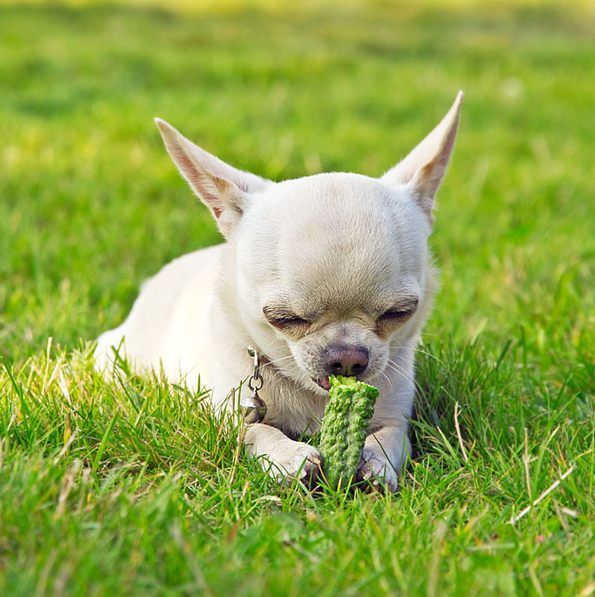
Cucumbers are safe for dogs to eat. Look at this tiny gentleman gnawing on one!
Another common vegetable to consider when thinking, “What vegetables can dogs eat?” is cucumbers. Especially if it’s peeled and given in chewable portions, cucumber is fine for dogs. As for pickles, the excess of vinegar and salt in pickles may be a bit more than your dog’s digestive system would appreciate.

5. Can dogs eat avocado?

Parts of the avocado tree and fruit contain a natural antifungal agent called persin, which is hazardous to dogs when consumed in great enough quantities. Needless to say the pit or seed of an avocado should not be given to a dog; aside from the natural toxins it contains, it can cause intestinal blockages. However, it’s safe for dogs to eat the green, fruit part of an avocado in small amounts.

6. Can dogs eat corn? Can dogs eat popcorn?

Is corn okay for dogs to eat? What about popcorn for dogs?
While the kernels of ripe corn are okay for dogs, the cob itself is a bit more dangerous. Ingested by a dog, even small pieces of corn cob can tear at and cause damage to the walls of a dog’s digestive tract. As for popcorn, take common-sense precautions. Plain and unadorned — that is to say, air popped, with neither salt nor butter — popcorn can be a nice treat for a dog. Bottom line: served in an appropriate manner, both corn and popcorn are safe for dogs to eat.

7. Can dogs eat broccoli?

Broccoli is another staple to consider when questioning, “What vegetables can dogs eat?” In very small amounts, the head of broccoli should not present any issues for your dog, but only in very small amounts. Received wisdom across multiple sources suggests that if it accounts for no more than five to 10 percent of a dog’s daily food intake, broccoli is all right for dogs. More than that and you can have a dog with a severely upset stomach. Therefore, broccoli is another yes and no affair; use your best judgement.

8. Can dogs eat potatoes? Can dogs eat sweet potatoes?

Are potatoes safe for dogs to eat?
As with tomatoes, the leaves, stems and unripened fruit of potato plants contain solanine, which is toxic to dogs. Even ripe, a potato is not a good idea for dog nutrition. Peeled, and then cooked or mashed, on the other hand, your dog may enjoy a bit of potato. Observe the same caution you would with popcorn, and make sure there’s no salt or butter present. The same — no additives — goes for sweet potatoes, even though they are fundamentally different plants.

9. Can dogs eat onions?

Eaten by dogs, onions cause red blood cells to break down, a condition called hemolytic anemia. The breakdown of red blood cells means that the dog gets less oxygen. The more concentrated the onion, the more quickly it works.
Can dogs eat garlic? Your dog should avoid garlic as well for the same reason. If you’re like me and enjoy onion in your guacamole, it’s even more a reason to keep that avocado dip you find delicious well away from your dog. The answer here is definitely no.

10. Can dogs eat asparagus?

Asparagus is another household veggie that crops up when thinking, “What vegetables can dogs eat?” Well, as long as the amount is small and reasonable, asparagus presents no problems for dogs.

11. Can dogs eat green beans?

Green beans, in moderation, are fine for dogs. Raw or cooked, as long as you avoid salt and other additives, your dog may enjoy some green beans.

12. Can dogs eat peas?

If you dog has a taste for peas, then by all means, let them have a few! When it comes to, “What vegetables can dogs eat?” this one is a yes.
In 1816, Richard Lawrence wrote that “parsnips, carrots, cabbages, and, indeed all vegetable matter, will feed dogs sufficiently well for the purposes of their existence.” Fortunately, we know better now to steer our dogs clear of avocado and onion, as well as to keep them from many unripened vegetable plants in the garden.
-------------------------------------------------------------------

Saturday, August 24, 2019

What do you feed a puppy? How about an adult dog or an older dog? Let's discuss the best dog food according to your dog's age.


If it were up to your dog, he’d be on a steady diet of pizza and cheeseburgers. Since those things aren’t good for dogs, your job as a pet parent is to pick healthy food made especially for canines. Choosing a food brand can be daunting enough with all the different choices out there. And what about type of food? And then there’s canned versus dry — which should you pick? Let’s break things down by the best dog food for all life stages.

The best dog food to feed a puppy

What is the best dog food to feed to a puppy?
When my Corgi, Nigel, was a puppy, I fed him the puppy food recommended by his breeder. It was a quality premium brand, and he liked it. He only ate dry kibble because his sensitive tummy couldn’t handle the canned version. Dry food has less moisture than canned, so Nigel was less likely to get loose stools with dry food.

Puppies are as different from dogs as human babies are from adults when it comes to what their digestive systems will tolerate. While Nigel had trouble with canned food, my parents’ Pomeranian, Monique, did great on canned food as a puppy.
Whether it’s dry or canned, what’s most important is that the food is made especially for puppies. “Puppies need more protein than adult dogs do,” said canine nutrition expert Mary Straus of DogAware.com, who added that, despite what some people think, high protein does not cause orthopedic problems in growing pups. “Too much calcium and overfeeding in general are the culprits there.”
The best dog food to feed a puppy is a food formulated especially for young dogs and to give the amount listed on the bag or can. Being a Corgi, Nigel would have eaten three times the recommended amount of food if I’d let him, but the result would have been an overweight puppy who may have developed joint problems. I had to deal with sad puppy eyes when he asked for more and I said no, but it was for his own good.

The best dog food to feed a growing dog

What is the best dog food to feed a growing dog?
Dogs in the age range of 6 to 18 months are ready for adult dog food. They need a lot of energy at this age, so the best dog food to feed a dog this age is a quality food with a good amount of calories.
My friend, Jorge, feeds his 10-month-old German Shepherd Dog a premium-brand kibble for adult dogs. Hemi is a bundle of energy, and Jorge finds it hard to keep weight on him. Hemi gets a big helping of dry food twice a day and is still hungry all the time. Dogs his age are very active and are still growing, so they usually have big appetites.
For some owners of young, growing dogs, money can be an issue. That makes dry food a more obvious choice. “Dry food is almost always cheaper than canned food, providing a comparable number of calories,” Straus said. “This impacts owners of large dogs more than those with small dogs, who may also have trouble getting through a bag of kibble while it is still fresh.”
Luckily, dog food manufacturers usually offer kibble in different sized bags. You can find bags starting at 5 pounds all the way up to 50 for some brands. If you have a small dog, you should buy a smaller bag. You don’t want to store dry food for more than 30 days because it starts to lose its freshness.

The best dog food to feed an adult dog

What is the best food to feed an adult dog?
My 6-year-old Australian Shepherd mix, Candy, has a slow metabolism. When I first adopted her from my local shelter, she was about 5 pounds overweight. She was probably eating kibble at her former home, and I’m sure that’s what she was getting at the shelter. To help her lose weight, I started her on a quality canned food. Canned food is generally lower in carbohydrates than dry food, and since Candy isn’t a very active dog, I thought putting her on a lower-carb diet would help her shed the pounds.
Of course I had to be careful with fat content, too. “Too much fat can lead to weight gain, especially in dogs who are not very active,” Strauss said. “If the amount fed must be strictly limited to prevent weight gain, this could contribute to nutritional deficiency, so I would reserve higher-fat foods for young, active dogs.”
After a few months of eating a measured amount of canned food, Candy dropped her extra 5 pounds. I then put her on a maintenance diet, which consists of both canned and dry food. She’s now at a good weight on this diet.
My friend Michelle, on the other hand, recently had to increase her Australian Cattle Dog’s food portions because Annabelle was a little too lean. After her vet referred to Annabelle as “a Victoria’s Secret model with no fat reserves to fall back on,” Michelle upped Annabelle’s kibble ration. Annabelle quickly gained about 2 pounds. She still has a lean body, but you can’t feel her ribs or hips anymore. So, the best dog food for an adult dog really depends on your individual dog!

The best dog food to feed a senior dog

What is the best dog food to feed a senior dog?
My neighbor’s senior Dachshund, Maynard, has arthritis and some other health issues that mean paying special attention to what he eats. Not only are Maynard’s teeth not working really well these days, he also has a tendency toward a picky appetite. His owners feed him a brand of canned food that he really likes. The wet food is easy for him to chew, and it also gives him more water in his diet.
“The added moisture in canned foods may be beneficial for older dogs to help them stay hydrated,” said Straus, who pointed out that adding water to dry food can do the same. But in Maynard’s case, he doesn’t want dry food. He only wants canned. And at his advanced age of 16, Maynard gets what Maynard wants.
Once a dog gets to a certain age, giving him a quality food that he enjoys eating is the best approach, whether it’s canned or dry. “The question of canned or dry doesn’t have to be either/or,” Straus said. “It’s fine to feed both, either together or in separate meals, as long as it agrees with your dog.”

The best dog food to feed your dog on a fresh food diet

Straus said you can improve commercial diets of all kinds at any stage of your dog’s life by adding fresh foods to her diet, including:
- Lean meats
- Eggs
- Canned fish without bones (sardines, pink salmon, jack mackerel)
- Dairy (yogurt, kefir, cottage cheese)
- Fresh fruits and vegetables (as long as you stay away from grapes or raisins, which can cause kidney failure in dogs).
If you share some of these healthy foods with your dog, only give him a little bit as a top dressing on his dog food. Too much of a good thing can upset his stomach — and leave you wishing you’d stuck with dog food.

The bottom line on the best dog food

Every dog, regardless of age, is an individual with specific needs. The best way to find the best dog food for your canine is to continually consult with your vet.
-------------------------------------------------------------------

Posing your dog with an alcoholic beverage for a photo and taking him along to a local brewery is cute — but can dogs drink beer? And can dogs drink wine? What about any type of alcohol?


A dog posing with a glass of beer or wine is cute — and sure to get you tons of likes and comments on social media. But, can dogs drink beer? Can dogs drink wine? And can dogs drink any type of alcohol? Let’s take a look at dogs and beer, wine and other types of alcohol.


Can dogs drink wine?

Can dogs drink wine? 
Well before they are processed or fermented for use in beer, wine or any mixed drink, the main ingredients of alcoholic beverages are among the top plants that are toxic or poisonous to dogs. We’ll start with grapes. There’s no question that seeded or seedless, the grape is nature’s candy; grapes are a sweet, juicy, delicious fruit. While the reason why is still a mystery to veterinary science, there is no question that grapes are also toxic to dogs. That rules out anything made with or from grapes, from raisins to wine.

Can dogs drink beer?
Can dogs get alcohol poisoning?
What about beer — can dogs drink beer? Following water, grain and yeast, hops constitute a primary ingredient in the production of beer. Like grapes in wine, it is not known precisely why hops are toxic to dogs. Like grapes, though, there is no doubt that consumption of hops causes violent physical reactions in many canines.
We’re talking not only about immediate physical symptoms such as vomiting, wild fluctuations in body temperature and labored breathing, but also potential kidney damage. People who enjoy brewing their own beer at home should be especially careful to store brewing hops securely away from curious dogs.

Can dogs drink beer or other types of alcohol? Examining the toxic ingredients.

So, can dogs eat beer? Dogs can and will eat or drink anything out of simple hunger, curiosity or boredom. There are YouTube videos beyond count proving that people find it entertaining to watch a dog consume “human” foods and drinks. What these don’t take into account is that dog physiology is, in any number of ways, very different to that of their human owners. Dogs’ intolerance of alcohol in part derives from their size. It takes far less alcohol to intoxicate and poison an adult dog than it does for a fully grown adult human.
But, can dogs drink beer — even if it’s in very small amounts? Unfortunately, beer or alcohol doesn’t even have to be poured in a glass or a bowl for alcoholic or ethanol-based food or drink to pose a real threat to your dog’s health. Dogs have displayed symptoms of alcohol poisoning and ethanol toxicity from things as simple as a rum cake, and from having absorbed wine or other alcohol through their skin when it’s been spilled on a carpet or couch. Eating uncooked dough containing yeast is also sufficient to provoke symptoms of poisoning in dogs.

Can dogs drink beer or other types of alcohol? Looking at physical intolerance.

Another point to look at when answering, “Can dogs drink beer?” Humans build up tolerance to beer and wine through responsible consumption over time. A dog’s kidneys were not meant to filter or process the alcohol content of beer, wine or indeed drinks of any alcoholic nature. And because dogs tend, by and large, to be much smaller than their human owners, even a small amount of wine or beer is sufficient to cause noticeable physical alterations in the typical dog.

Can dogs drink beer? What to know about dogs and alcohol poisoning.

When answering, “Can dogs drink beer?” we’re through two reasons — potentially toxic ingredients and physical intolerance. But we’re only just now reaching the major reason why dogs shouldn’t ever drink or lap up alcoholic beverages, including wine and beer. That reason is that, in any configuration, whether it’s beer, wine, a cocktail, or your most trusted brand of nighttime cough syrup, dogs are at risk of alcohol poisoning, also called ethanol toxicosis.
Alcoholic beverages of every stamp cause the same kinds of reactions in dogs that they provoke in humans, only — due to dogs smaller size and inability to process its intoxicating properties — much faster and with more dangerous results. The higher the alcohol content, the worse it is for your dog. As in humans, one of the first things affected by alcohol consumption is the nervous system. Confusion, disorientation and weakened motor functions are all primary symptoms of ethanol toxicity in dogs.
Given enough alcohol, people can pass out. For dogs, the consequences can be more severe with much less. We’re talking about digestive upset, including vomiting, diarrhea and trouble urinating on the lighter end of things. In large enough quantities, which needn’t be large at all, dogs can suffer potential comas, kidney failure and heart failure on the extreme end. Severe indications of alcohol poisoning in dogs can manifest within as little as an hour after consumption.

The bottom line answer to “Can dogs drink beer?” Enjoy your drinks responsibly, and without your dog.

The short answers to the questions, “Can dogs drink beer?” “Can dogs drink wine?” “Can dogs drink alcohol?” is always a resounding no! Whether you’re having pals over for sporting events or sharing an evening with a special someone, make sure all alcoholic beverages and foodstuffs containing alcohol are kept well out of the reach of your dogs. If it’s nice out and you’re headed to the local beer garden or brewery, or you’re planning a winery tour, and the place is dog-friendly, then, by all means, take your dog along for the company.
No matter where you are, enjoy your favorite beverages responsibly, but don’t let your dog’s curiosity or pleading eyes influence your choices. The sheer number of potential disasters that alcohol presents to our dogs should be reason enough to properly dispose of empty containers when your dogs and puppies are nearby.
-------------------------------------------------------------------
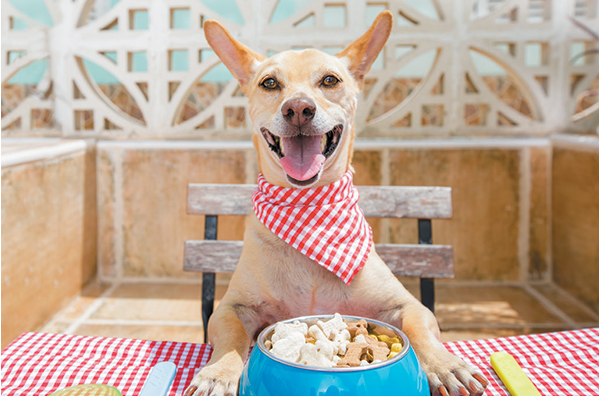

Tuesday, August 20, 2019

Let's explore the basics of the dog digestive system, like how long does it take for a dog to digest food? How long does food stay in a dog’s stomach? Where does you dog’s digestion actually take place?


Most dog owners don’t spend a lot of time thinking about their own digestive processes, much less the basics of the dog digestive system. The only times we really engage with the dog digestive system are when we feed our dogs and when we trot them out to eliminate their waste. But what happens to a dog’s kibble or canned food from the time it enters their gaping maws to when it passes out the other end? How long does it take for a dog to digest food? If you were to hazard a guess, you could probably name the major stops along the route in the dog digestive system.
Food enters through the mouth and slides down the esophagus on its way to the stomach. From there, it takes in the sights of the small and large intestines before departing the body. If that seems too simple, it is! The dog digestive system involves a staggering number of organs, fluids and enzymes, all playing their roles to convert food into usable energy. Whatever is left over, as surplus to requirements, is expelled through the anus in the form of feces.

Let’s take a closer look at the dog digestive system and answer the following questions along the way:

How long does it take for a dog to digest food?

- What are the major components of the dog digestive system?
     + From mouth to stomach
     + A fantastic journey through the small intestine
     + The large intestine and waste removal
- Assorted questions about the dog digestive system:
     +Where does digestion actually take place?
     + How long does food stay in the stomach?
     + How long does it take for a dog to digest food

Basics of the dog digestive system

Pooping is the final step in the dog digestion process

Part 1: From mouth to stomach

The front end of the dog digestive system encompasses the mouth, esophagus, stomach and small intestine. Dog digestion begins almost immediately with saliva in the mouth. You may have wondered why dog tongues are so slobbery. Since they spend less time chewing food than humans tend to, all of that saliva kickstarts the process of breaking down and coating food particles for smoother passage through the esophagus. The esophagus is heavily muscled, actively pushing food into the stomach.

Part 2: A fantastic journey through the small intestine

A dog’s stomach is a super-acidic environment, which is useful for opportunistic omnivores, helping them more easily digest things like bone and raw meat. Yes! Dogs can digest bones! At this stop in the dog digestive system, solid food is rendered into a substance called chyme, which is made up of food, water and acid. All food — from your Michelin 3-star-rated fine cuisine, to your dog’s canned chunks or dry kibble — ends up as this highly acidic gloop. As this chyme proceeds into the small intestine, the real work of digestion — the isolation of nutrients that can be used by the body— is done.
There are three parts of food’s journey through the small intestine. In the first part, the duodenum, chyme is treated with enzymes and hormones from the liver and pancreas, which reduce the acid level of the chyme. The gloop is now prepared to have the rest of its nutrients extracted and absorbed. This happens in the second part of the small intestine, which is called the jejunum. This part of a dog’s small intestine is basically covered in little probes, which, like fly paper, pick up and absorb useful nutrients into the bloodstream.

Part 3: The large intestine and waste removal

The final part of the small intestine is the ileum, which absorbs whatever nutrients remain. By this point, the once-acidic chyme gloop is now a sort of thicker pasty substance. You’d be surprised how little of the food you or your dog eats is actually used by your body. Did you ever wonder why the dog digestive system produces so much poop? It’s because the actual nutrients — proteins, vitamins, fats and so on — that your dog’s body can utilize are miniscule in proportion to the physical volume of most dog food.
How long is this part of the dog digestive system? It varies by size. If you stretched out a dog’s small intestine, it would be nearly three times as long as the dog. The back end of a dog’s GI tract is fairly short by comparison, just over a foot long, give or take, depending on the dog. Its primary components are the large intestine and the anus. The large intestine is basically a water remover and garbage compactor. Having spent the first half of its journey being mashed up, dissolved and sifted, any parts of a dog’s meal that cannot be used is treated by bacteria, and reconstituted into a solid package we call dog poop.

Assorted questions about the dog digestive system!

Now, let’s answer some common questions about the dog digestive tract. 

How long does food stay in a dog’s stomach?

Though dogs are omnivores, they are opportunistic ones. That means that while they can eat almost anything, the dog digestive system can’t break down and utilize everything. Animals like humans or cows, to name two, have GI tracts made to process plant matter. As a result, their intestines are much longer and more drawn out than those of dogs. Since cows depend on vegetable matter, they even get extra compartments in their stomach, and can regurgitate food to chew and digest it fully.
A dog digestive system, depending more on meat proteins, is much more efficient. Depending on its digestibility, food can stay in a dog’s stomach much longer than either a human or a cow. If the meal is not strictly meat, comprising a variety of vegetable, grains and proteins, it will have vacated the stomach completely in 12 hours after eating. Compare that to four to five hours in a normal adult human.

Where does digestion actually take place in the dog digestive system?

As you may have gleaned from tracing food’s intricate journey from the food bowl in your kitchen to the poop bag in the dog park, the multiple processes of the dog digestive system means that it does not happen in one spot. From the moment comestibles come in contact with teeth and saliva in the mouth, digestion is happening.
A dog digestive system is just that: a system, and digestion takes place at every point along the course. Food is disassembled in a variety of ways, physically and nutritionally, from the mouth to the stomach. The majority of its conversion into absorbable nutrients happens in the small intestine, and digestion is only complete when your dog assumes the familiar position for excreting waste.

How long does it take for a dog to digest food?

Finally, the question about the dog digestive system that got us started. Unfortunately, there’s no set answer! So many variables are involved, that even in a perfectly healthy dog, the time to digest a single meal can be dramatically different. Does your dog drink enough water? That has an effect on digestion time as well. Large dog breeds take significantly longer to digest food than small ones.
Is your dog sedentary, spending most of the day on the couch? Does the dog get a couple of walks a day? Dog exercise has a definite impact on motility, or the way that the muscles of the dog digestive system propel food through the process. Total time from entry to exit depends on a wide range of factors, from the size of the dog to the quality of the food. Wet food takes less time to digest than dry kibble. Speaking very broadly, operating at optimum efficiency, a dog can process a can of wet food in as few as four hours, while the same amount of dry food can take eight hours to make the same journey!
-------------------------------------------------------------------


Popular Posts